Marsiya is an elegiac poem of mourning written when someone close, someone much loved dies. Urdu literature has a rich tradition of Marsiya goi.
There are two types of marasi. The riwayati marsiya, one that is written to commemorate the martyrdom of Imam Hussain and his family and friends in the battle of Karbala which was fought on the 10th of October 680 AD; and Shaksi marsiya – a marsia written on a person’s death by his follower, admirer or a loved one. Marsiya-e-Gopal Krishna Gokhle by Brij Narayan Chakbast, Marsia-e-Daag by Allama Iqbal, Marsiyae-Gandhi by Majaz Lucknowi, A marsiya written by Mirza Ghalib after the demise of his elder brother, Jan Nisar Akhtar’s marsia written on the demise of his wife, Safiya are shaksi marasi.
The earliest marasi are reported from the 16th century Deccan in the deewan of Muhammad Quli Qutub Shah. However, the riwayati marsiya writing began in Lucknow somewhere around the 17th century.
The battle of Karbala was fought at Karbala (central Iraq) between a small group of people that included men, women, old and young; lead by Husayn Ibn Ali against the huge army of Yazid, the second Umayyad Khalifa (Caliph). Several hundred centuries later, the shadow of the events that took place on the grounds of Karbala still influences the Urdu literary tradition in India and that is simply because of the power of narration of poets like Mir Anis, Mirza Dabeer, Ali Hyder, Josh Malihabadi and several others.
A typical riwayati marsia has a preamble (tamheed), portrait or description of the character (chehera), description of the physical qualities of the character (sarapa), departure for the battle (rukhsat), his arrival on the battlefield (aamad), the character’s declaration of his noble ancestry and his superiority (rajaz), the battle (jang) the martyrdom (shahadat) and lamentations (bain).
The heart-wrenching description of the battlefield, the thirst, the helplessness at rukhsat, and the pain of losing dear ones, and the resolve to stand by the truth moves the reader of a marsiya and one can not help but shed a tear.
I leave you with some lines by Mir Anees.
The caravan is departing for Kufa from Madina, Hazarat Sugra is ill, she can not travel and and has to stay back at Madina. She is lamenting that she may loose her brothers in the war when her mother tells her:
माँ बोली ये क्या कहती है सुग़रा तिरे क़ुर्बां
घबरा के ना अब तन से निकल जाये मिरी जां
बेकस मेरी बच्ची तेरा अल्लाह निगहबां
सेहत हो तुझे मेरी दुआ है यही हर आँ
क्या भाई जुदा बहनों से होते नहीं बेटा
कुन्बे के लिए जानों को खोते नहीं बेटा
The caravan reaches close to Kufa and there is a standoff. A battle is imminent. Mir Anees describes the morning scene at the battlefield of karbala
चलना वो बाद-ए-सुब्ह के झोंकों का दम-ब-दम
मरग़ान-ए-बाग़ की वो ख़ुश-अल्हानियाँ बहम
वो आब-ओ-ताब नहर वो मौजों का पेच-ओ-ख़म
सर्दी हवा में पर ना ज़्यादा बहुत ना कम
खा खा के ओस और भी सब्ज़ा हरा हुआ
था मोतीयों से दामन-ए-सहरा भरा हुआ
And the scene where after offering the namaz, the men are ready to fight knowing what the outcome is going to be.
तैयार जान देने पे छोटे बड़े हुए
तलवारें टेक टेक के सब उठ खड़े
And the drama at the battlefield, describing the army of Yazid
घोड़े को अपने करते थे सेराब सब सवार
आते थे ऊंट घाट पे बाँधे हुए क़तार
पीते थे आब-ए-नहर परिंदे आ के बेशुमार
सके ज़मीं पे करते थे छिड़काओ बार-बार
पानी का दाम-ओ-दर को पिलाना सवाब था
इक इबन फ़ातिमा के लिए क़हत-ए-आब था
A description of the attack by spears on Hazarat Abbas
यूं बरछीयॉं थीं चारों तरफ़ इस जनाब के
जैसे किरन निकलती है गर्द आफ़ताब के
And when Imam Hussain is ready to leave for the battle he says
जिस वक़्त मुझे ज़बह करे फ़िर्क़ा-ए-नारी
रोना ना सुने कोई ना आवाज़ तुम्हारी
बे-सब्रों का शीवह है बहुत गिरयाँ-ओ-ज़ारी
जो करते हैं सब्र उनका ख़ुदा करता है यारी
हों लाख सितम , रखियो नज़र अपनी ख़ुदा पर
इस ज़ुलम का इन्साफ़ है अब रोज़-ए-जज़ा पर
And the prayer of Zaynaib after the martyrdom
सर पर अब अली ना रसूल फ़लक वक़ार
घर लुट गया गुज़र गईं ख़ातून-ए-रोज़गार
अम्मां के बाद रोई हुसैन को मैं सोगवार
दुनिया में अब हसीन है इन सब का यादगार
तो दाद दे मिरी की अदालत पनाह है
कुछ उसपे बन गई तो ये मजमा तबाह है
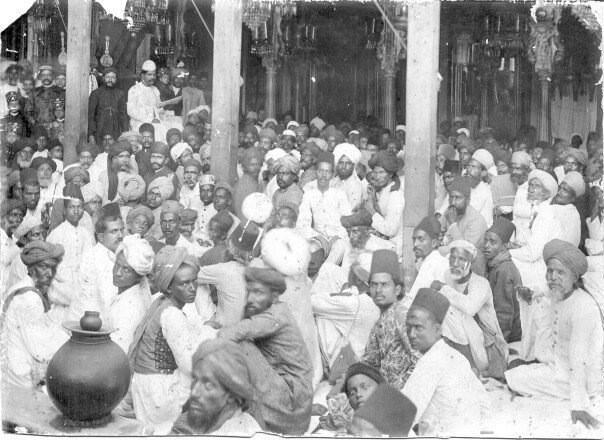
Cover Photo: Mir_Anees_in_Hyderabad_in_1871_reciting_marsia